It sucks when your computer gets a virus, and it’s even worse when you get one. But amidst all the coughing, sneezing, and malaise, there’s an innate beauty that accompanies a viral infection considering that us humans ourselves are viruses- well, kind of.
I don’t mean this in the metaphorical sense where humans are ruining the environment (although it definitely is a valid comparison); rather, I’m talking about the fact that the connection between humans and viruses as biological entities is not as remote as we may assume- in fact, the connection lies within our very DNA.
Viruses are microscopic infectious agents that contain genetic material surrounded by a protein coat known as a capsid, and sometimes possess an envelope- an outer lipid layer- derived from a host cell. By hijacking host cell machinery, they make copies of their genes, replicate, and spread.
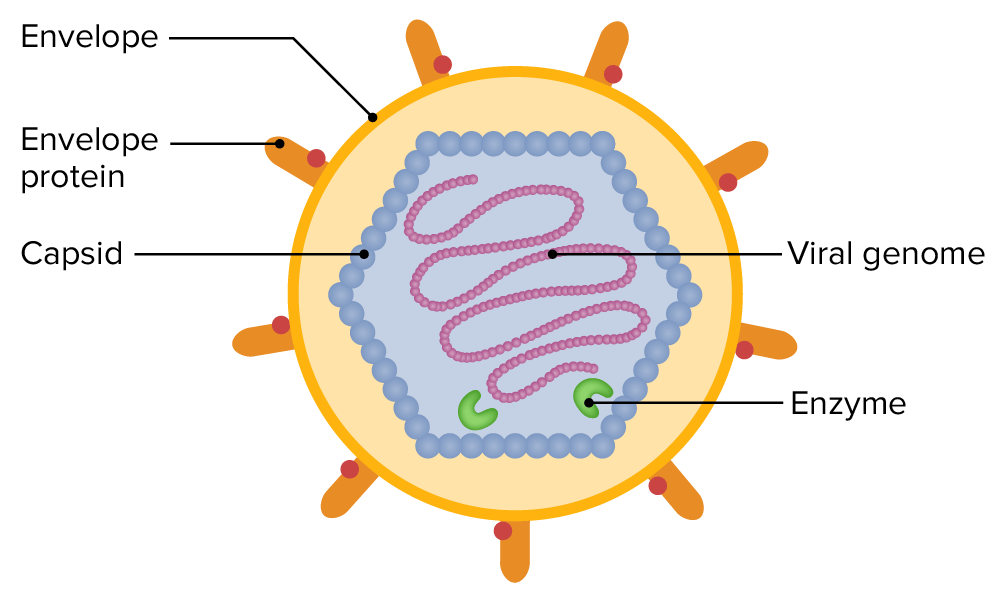
As opposed to bacteria, viruses lack the ability to independently reproduce and metabolize.
Whether or not viruses are considered living organisms is a highly debated topic in biology. Although they show certain traits of life such as possessing genetic material and evolution, without a host cell they are functionally inert.
Retroviruses are an especially interesting subset of viruses because they contain RNA as genetic material, but possess an enzyme- reverse transcriptase- which enables them to convert their RNA into DNA that can be integrated into their host cell’s genome. Once integrated, the viral DNA is known as a provirus and can be replicated alongside the host cell’s DNA, making it transmissible to all the daughter cells that originate from the infected cell.
Human Immunodeficiency Virus, more commonly known as HIV, is a particularly notable retrovirus that works by targeting CD4+ T cells- immune cells that are essentially commanders of the body’s adaptive immune response.
After integrating its DNA into CD4+ T cells, HIV begins to replicate, eventually killing cells and causing the body’s T cell count to gradually decline. HIV evades immune detection by downregulating MHC-I molecules on infected cells—markers that would normally alert cytotoxic T cells to their presence—while simultaneously preserving inhibitory signals that prevent natural killer cells from mounting an attack.
These combined processes ultimately cripple the body’s ability to carry out proper immune functions, allowing the virus to proliferate, and eventually causing Acquired Immunodeficiency Syndrome (AIDS).
Given their ability to outsmart the immune system and assimilate into host DNA, it is evident that retroviruses possess the capacity to drastically transform and impact human bodies. This becomes especially apparent when considering the fact that around 8% of the human genome is derived from sequences that are similar to infectious retroviruses1.
Human endogenous retroviruses (HERVs) represent remnants of ancient retroviral infections that assimilated into germline DNA, meaning that rather than infecting somatic cells, the retroviruses infected germ cells- cells that give rise to gametes such as sperm and egg cells.
When somatic cells get infected by retroviruses, any daughter cell produced by the infected cell carries the provirus in its DNA; however, the provirus does not get passed down to the host’s offspring because somatic cells are not involved in reproduction. In contrast, germ cells are responsible for the formation of the zygote so their infection comes with much larger implications.

By hijacking the germline, these ancient retroviruses incorporated themselves into DNA that was passed down to offspring, becoming a permanent part of their existence, as well as any of their descendants’.
Numerous such infections taking place over the countless years of human existence have shaped the human genome and molded it into what it is today, even serving as evidence of milestones in our evolution.
But doesn’t this seem rather paradoxical? Evolution selects for favorable traits within a species, and viral infections can be harmful, so how would DNA that is ingrained with viral infections survive and reproduce till this day and age?
Mutations can affect organisms positively, negatively, or have no significant impact on phenotype. The retroviral infections that didn’t immediately kill their hosts were most likely the ones that were conserved and passed on to future generations, and as this happened over the years, most of the HERVs accumulated mutations, deletions, or truncations that rendered them unable to produce infectious particles.
While most HERVs have been silenced and serve no function in the genome- at least, not in the classical protein-making sense- certain HERV elements have been co-opted and play critical roles in specific physiological processes showing.
The most famous example of this involves syncytin-1, a protein derived from the env gene of a retrovirus which helped it enter host cells and create its envelope. While its other genes lie inactivated within our DNA, humans have repurposed the env gene of this retrovirus to produce syncytin, which promotes cell to cell fusion in the placenta.
The placenta is an organ that forms during pregnancy and acts as the link between the mother and fetus, supporting fetal growth and development. It forms when the blastocyst- an early embryonic ball of rapidly dividing cells that forms after an egg cell is fertilized- travels to the uterus and implants into the endometrial lining.
The blastocyst is made up of two layers: the outer layer is known as the trophoblast, whereas the inner layer is the embryoblast; the latter is what develops into the embryo, whereas the former is what actually penetrates the endometrium to form the placenta.
The trophoblast itself divides into two distinct parts: the syncytiotrophoblast and the cytotrophoblast.

The syncytiotrophoblast forms the outer layer of the placenta and facilitates implantation of the embryo, gas and nutrient exchange between the mother and fetus, along with hormone production. It forms from the fusion of underlying cytotrophoblast cells, essentially acting as a single, large, multinucleated cell, which allows it to form a sound and efficient barrier that separates maternal and fetal tissue.
If you’re wondering how this fusion takes place, that’s where our domesticated HERVs come back into play. Our cytotrophoblast cells express syncytin-1, compelling them to merge into a single multinucleated sheath which becomes the syncytiotrophoblast.
The formation of the fused syncytiotrophoblast via syncytin expression has become essential for eutherian pregnancies as we know it, as it allows efficient maternal-fetal exchange by increasing the surface area of the placenta, creates a continuous seal which lowers the fetus’ risk of immune rejection, and overall promotes a longer gestational period2.
The extended in-utero development enabled by syncytin contributes to the degree of development eutherian newborns express at birth, especially when compared to their non-eutherian mammalian counterparts such as monotremes.
By essentially revolutionizing the way mammals perform live births, the incorporation of the retroviral env gene to produce syncytin illustrates the exaptation of retroviruses as a turning point in human evolution.
Alongside modern placenta formation, HERVs are implicated in numerous other physiological functions.
Some HERV sequences in our DNA act as gene regulators that enhance or downregulate the transcription of certain genes, while others have been implicated in playing a central role in the evolution of our innate immune system by exhibiting immunosuppressive properties while also providing protection against exogenous infections3.
The functionality of HERVs span far and wide, serving as a reminder that although the fossils of those ancient viruses no longer carry their infectious properties, they are far from inactive and unimportant.
Although the incorporation of retroviral DNA into the human genome has its benefits, HERVs have also been associated with various disease processes.
HERVs can be separated into different families based on the similarities between their sequences, and some of these families can act as self-sustaining amplifiers of immune activation, contributing to chronic diseases such as systemic lupus erythematosus (SLE)4,5.

SLE is an autoimmune disease characterized by self-reactive antibodies and strong cytokine signalling- specifically, type 1 interferons.
In people with SLE, certain families of HERVs are abnormally upregulated, producing RNA and proteins that resemble viral material, thereby provoking innate immune sensors and inducing a cytokine response.
Concurrently, HERV proteins engage in a form of molecular mimicry where antibodies formed against HERV proteins accidentally attack the body’s nuclear material, contributing to the hallmark anti-nuclear antibodies seen in lupus4.
Inflammatory cytokines further upregulate HERV expression, ultimately causing a positive-feedback loop: cytokine signalling triggers HERV expression, HERV-derived RNA stimulates immune sensors, additional cytokines are released, and ultimately the inflammatory cascade is sustained4,5.
In addition to chronic inflammatory conditions, the dysregulation of HERV sequences is also associated with various cancer mechanisms.
When functioning improperly, HERV sequences can enhance the transcription of oncogenes and downregulate the transcription of tumor suppressor genes, promoting carcinogenesis.
Certain HERV proteins also have oncogenic potential themselves; for example, the env gene of retrovirus HERV-K is expressed in 70% of breast cancers and has been linked to breast cancer progression, showing decreased survival rates in patients with high expression6.
HERVs play an undeniable role in our functional biology, yet possess the capacity to drastically disturb homeostasis upon malfunction. Although much remains to be discovered regarding the ways in which these ancient retroviral sequences modulate genetic mechanisms, active investigation of the topic seeks to elucidate these processes.
By better understanding the multidimensional roles HERVs play within our genome- whether it involves coding for proteins or simply acting as regulatory sequences- identifying these functions could further our understanding of various disease pathways while developing therapies that target specific retroviral interactions.
It’s incredible to think that the viral infections our ancestors stumbled across ages ago play such a critical role in our evolution and modern biology.
A substantial portion of our genome was written by a chronic series of opportunistic infections that occurred over generations, going to show how in biology, even the smallest events can be amplified into significance given enough time and magnitude.